
THE MANDALORIAN AND GROGU Shines in STAR WARS’ Return to the Big Screen

Screendollars
May 24, 2026
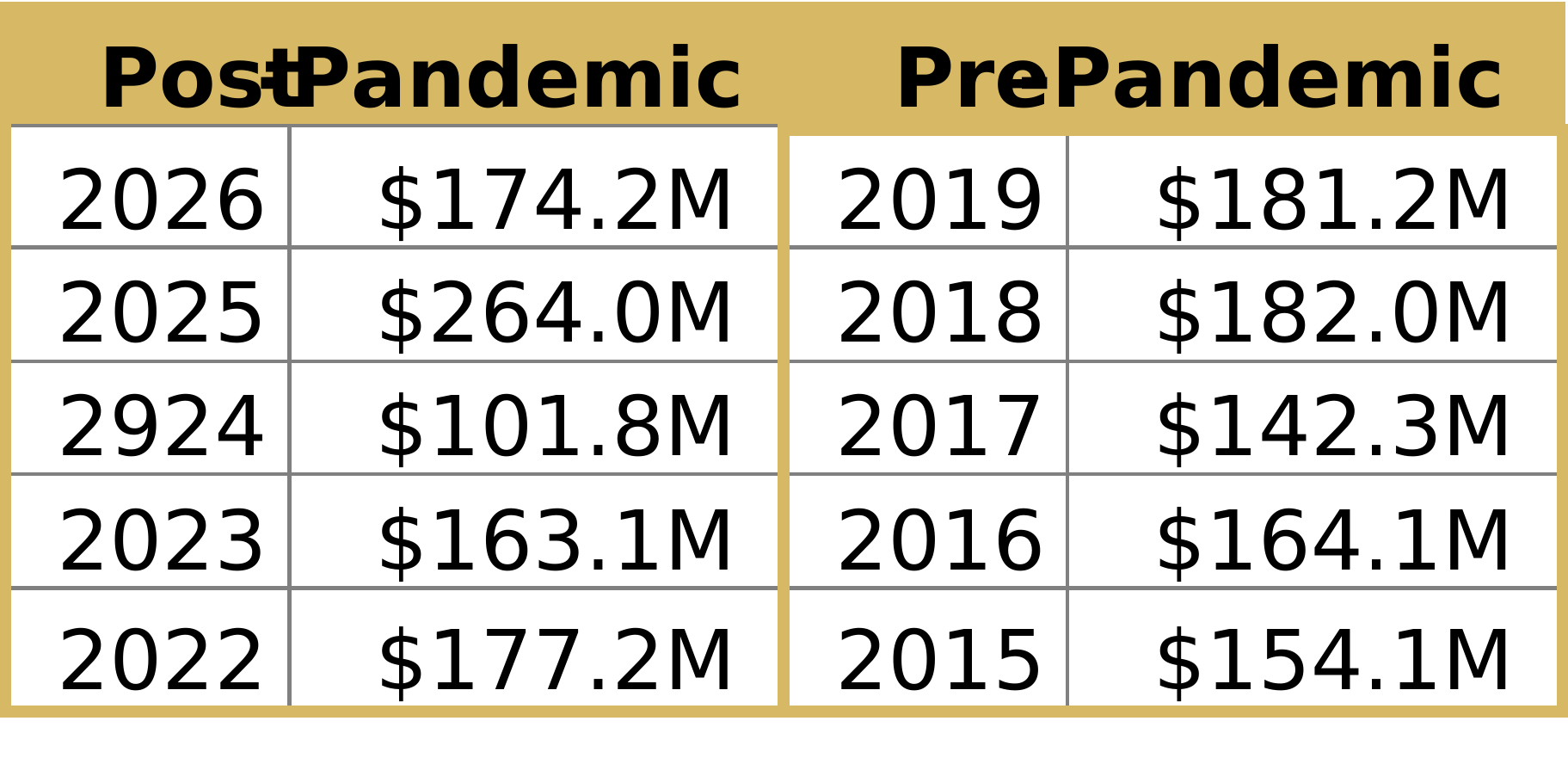
Disney’s STAR WARS: THE MANDALORIAN AND GROGU earned $82M in its first three days to win the Memorial Day box office battle. All films this weekend grossed $174.2M, which was good but not great by historical standards. Last year’s Memorial Day weekend featured the one-two opening punches of Disney’s LILO & STITCH with $146.0M and Paramount’s MISSION: IMPOSSIBLE - THE FINAL RECKONING with $64.0M, taking the 3-day total to $264.0M and 4-day to an enormous $330.2M after including Monday sales. These were the biggest 3- and 4-day totals of the year.
Here is a look at the Memorial Day box office for the last ten years after excluding the pandemic-impacted years of 2020 and 2021.
Memorial Weekend 3-Day Totals
 Before we lament this year’s 34% underperformance compared to 2025, it’s important to consider the following factors:

 THE MANDALORIAN AND GROGU represent Disney and Lucasfilm’s attempt to bring the Disney+ era of STAR WARS back to the big screen after a seven-year absence. The film was directed by Jon Favreau, who previously directed IRON MAN, CHEF, THE JUNGLE BOOK, and THE LION KING while also creating THE MANDALORIAN television series for Disney+. Favreau co-wrote the screenplay with Dave Filoni and Noah Kloor. The movie stars Pedro Pascal as Din Djarin/The Mandalorian alongside Sigourney Weaver, Jeremy Allen White as Rotta the Hutt, and supporting appearances from Martin Scorsese, Jonny Coyne, and returning characters from THE MANDALORIAN Disney+ series.
The story follows Din Djarin and Grogu after the fall of the Empire as the New Republic recruits them for a dangerous mission involving Jabba the Hutt’s son Rotta and lingering Imperial warlords. Favreau designed the film as a standalone adventure so that moviegoers who were unfamiliar with the Disney+ series could still follow the story.
The project originally began life as THE MANDALORIAN Season Four before the 2023 Hollywood labor strikes delayed development. During that pause, Lucasfilm reassessed its STAR WARS strategy and decided that the MANDALORIAN characters were strong enough to relaunch the theatrical side of the franchise. Disney CEO Bob Iger is reported to have seen the film as an important bridge between Disney+ series and theatrical movies. Production began in California in 2024 under the working title THUNDER ALLEY, becoming the first STAR WARS theatrical feature shot entirely in California, able to benefit from more than $21 million in state tax credits.
The production employed approximately 500 crew members and 3,500 extras. Favreau expanded the scale of The Mandalorian’s streaming series shoots by adding larger sets, expanded action scenes, and substantial IMAX photography while preserving the “used universe” aesthetic and practical creature work that made THE MANDALORIAN popular. The production budget is said to come in at $165M, making it relatively economical by modern STAR WARS standards and significantly cheaper than many recent Disney tentpoles.
Critical reception has been mixed, with a 62% critics' score on Rotten Tomatoes. The Denver Post said, “It’s glorious high adventure that, like the original Star Wars trilogy, is both accessible and visually daring.” The Film Verdict weighs in with “There’s no shortage of Star Wars–level wow factor, from the slimy beasts to the outer-space dogfights to Ludwig Göransson’s score.” The Wall Street Journal thought, “When it comes to reinvigorating the 'Star Wars' series, this is not the way.” The Daily Telegraph (UK) felt, “Everything Disney needed to revive the franchise after its seven-year absence from cinemas is in here. The problem is that there is only around 20 minutes of it, and much of the rest is hopeless.”
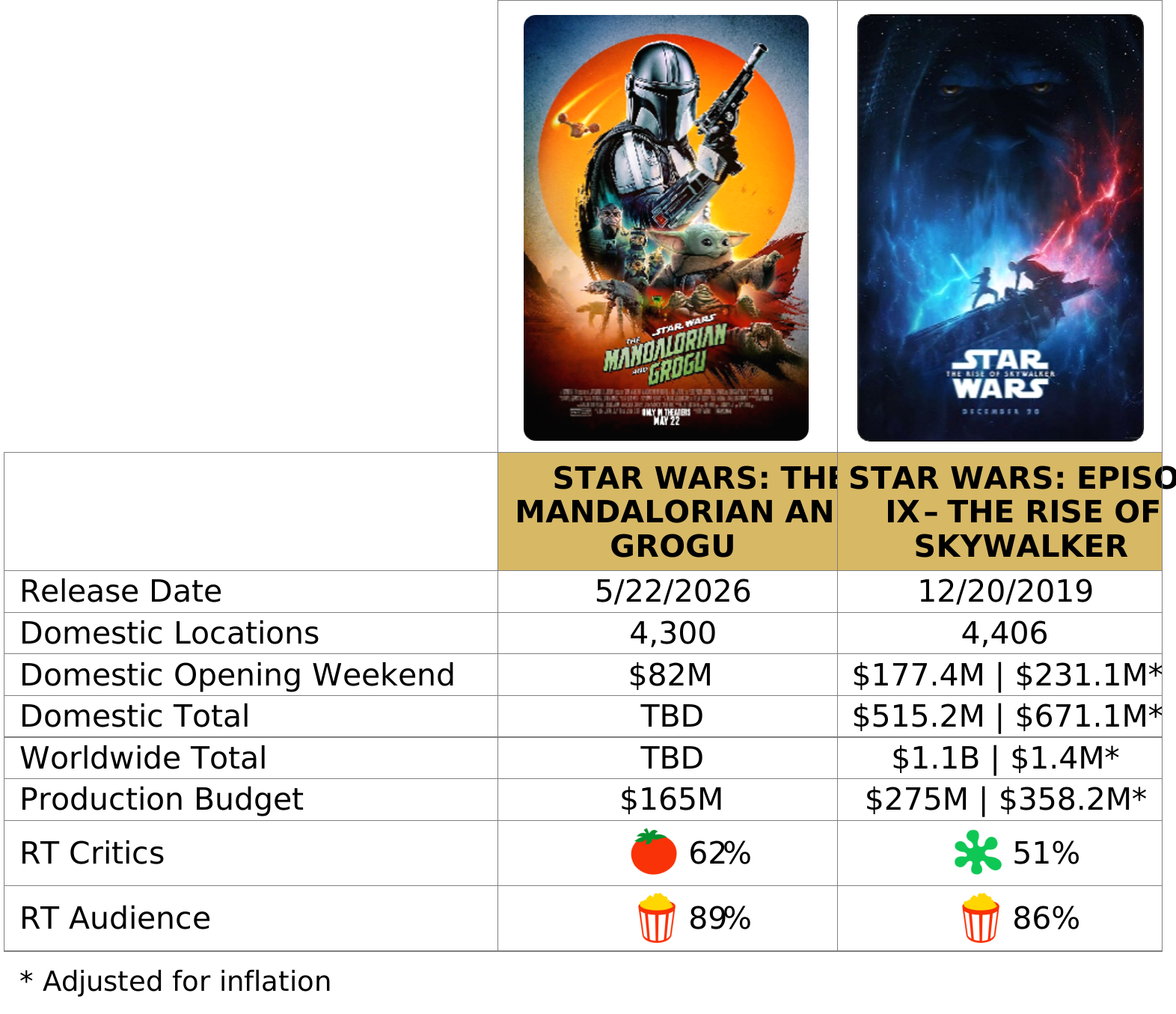
The film’s opening three-day total of $144.0M globally has put it on a path to profitability, needing around $415M to get into the black. For a comparison film, we have chosen the last franchise film before STAR WARS: THE MANDALORIAN AND GROGU, which was STAR WARS EPISODE IX: THE RISE OF SKYWALKER from 2019. We feel it’s the best film to gauge the health of the theatrical film franchise, given the before and after effects of the last seven-year hiatus.
THE MANDALORIAN AND GROGU represent Disney and Lucasfilm’s attempt to bring the Disney+ era of STAR WARS back to the big screen after a seven-year absence. The film was directed by Jon Favreau, who previously directed IRON MAN, CHEF, THE JUNGLE BOOK, and THE LION KING while also creating THE MANDALORIAN television series for Disney+. Favreau co-wrote the screenplay with Dave Filoni and Noah Kloor. The movie stars Pedro Pascal as Din Djarin/The Mandalorian alongside Sigourney Weaver, Jeremy Allen White as Rotta the Hutt, and supporting appearances from Martin Scorsese, Jonny Coyne, and returning characters from THE MANDALORIAN Disney+ series.
The story follows Din Djarin and Grogu after the fall of the Empire as the New Republic recruits them for a dangerous mission involving Jabba the Hutt’s son Rotta and lingering Imperial warlords. Favreau designed the film as a standalone adventure so that moviegoers who were unfamiliar with the Disney+ series could still follow the story.
The project originally began life as THE MANDALORIAN Season Four before the 2023 Hollywood labor strikes delayed development. During that pause, Lucasfilm reassessed its STAR WARS strategy and decided that the MANDALORIAN characters were strong enough to relaunch the theatrical side of the franchise. Disney CEO Bob Iger is reported to have seen the film as an important bridge between Disney+ series and theatrical movies. Production began in California in 2024 under the working title THUNDER ALLEY, becoming the first STAR WARS theatrical feature shot entirely in California, able to benefit from more than $21 million in state tax credits.
The production employed approximately 500 crew members and 3,500 extras. Favreau expanded the scale of The Mandalorian’s streaming series shoots by adding larger sets, expanded action scenes, and substantial IMAX photography while preserving the “used universe” aesthetic and practical creature work that made THE MANDALORIAN popular. The production budget is said to come in at $165M, making it relatively economical by modern STAR WARS standards and significantly cheaper than many recent Disney tentpoles.
Critical reception has been mixed, with a 62% critics' score on Rotten Tomatoes. The Denver Post said, “It’s glorious high adventure that, like the original Star Wars trilogy, is both accessible and visually daring.” The Film Verdict weighs in with “There’s no shortage of Star Wars–level wow factor, from the slimy beasts to the outer-space dogfights to Ludwig Göransson’s score.” The Wall Street Journal thought, “When it comes to reinvigorating the 'Star Wars' series, this is not the way.” The Daily Telegraph (UK) felt, “Everything Disney needed to revive the franchise after its seven-year absence from cinemas is in here. The problem is that there is only around 20 minutes of it, and much of the rest is hopeless.”
The film’s opening three-day total of $144.0M globally has put it on a path to profitability, needing around $415M to get into the black. For a comparison film, we have chosen the last franchise film before STAR WARS: THE MANDALORIAN AND GROGU, which was STAR WARS EPISODE IX: THE RISE OF SKYWALKER from 2019. We feel it’s the best film to gauge the health of the theatrical film franchise, given the before and after effects of the last seven-year hiatus.
 Looking forward, STAR WARS: STARFIGHTER starring Ryan Gosling is scheduled to come out in theatres on May 28, 2027, with a storyline set approximately five years after THE RISE OF SKYWALKER.
Before we lament this year’s 34% underperformance compared to 2025, it’s important to consider the following factors:
- Last year’s Memorial Day box office of $264.0M was the highest ever and the best 3 days of 2025.
- The average Memorial Day box office for the nine years from 2015-2019 and 2022-2025 is $170.0M, which makes this year’s $174.4M total quite typical.
- This year still has three legitimate chances to see a weekend outperform the best weekend of last year: the 7/17 opening of Universal’s ODYSSEY, the 7/31 opening of Sony’s SPIDER-MAN: A BRAND NEW DAY, and the 12/18 dual openings of Disney’s AVENGERS: DOOMSDAY and Warner Bros.’ DUNE: PART THREE.
#1 - STAR WARS: THE MANDALORIAN AND GROGU
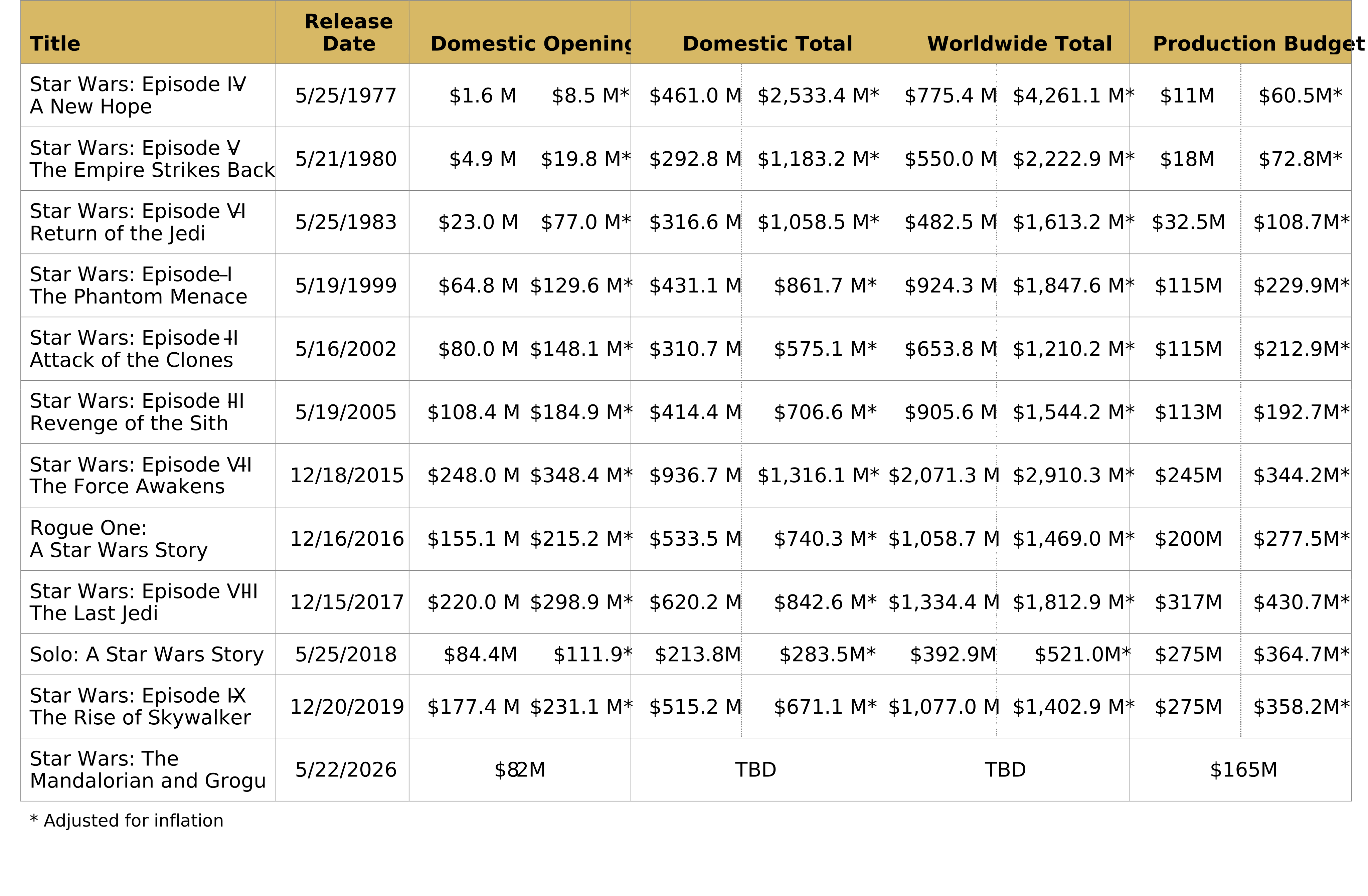
After a seven-year hiatus, Disney’s iconic STAR WARS franchise returned to the big screen this weekend with THE MANDALORIAN AND GROGU, finishing #1 with $82M in its first three days. The worldwide total was $145M. This opening is being followed closely by almost everyone in the industry. The eleven feature films in the STAR WARS franchise over the past 49 years have generated over $10B in worldwide box office. Many consider it to be the holy grail of movie franchises, especially for well-established, decades-long series with productive offshoots into merchandise and streaming. In 2012, Disney spent $4.05B to acquire Lucasfilm from George Lucas, bringing STAR WARS into the Disney family. Disney’s handling of STAR WARS has gone from a huge early theatrical success followed by overexposure, course correction, and a major pivot to Disney+. The theatrical rollout began brilliantly in 2015 when THE FORCE AWAKENS became a cultural event, with a $248M domestic opening, leading to a total box office of $936.7M domestically and $2.07B worldwide. This makes THE FORCE AWAKENS the top-grossing domestic release and the 6th highest worldwide release ever. ROGUE ONE followed in 2016 and proved Disney could make a non-Skywalker STAR WARS movie work, grossing $532.2M domestically and $1.06B worldwide. THE LAST JEDI in 2017 was also an enormous hit with $620.2M domestically and $1.33B worldwide, but it divided the fan base and began to expose the risk of treating STAR WARS like an annualized franchise. THE RISE OF SKYWALKER in 2019 still earned $515.2M domestically and $1.08B worldwide, but it felt more like brand exhaustion than a triumphant finale. The key mistake was frequency, with Disney releasing four STAR WARS movies in the five years from 2015 to 2019. While they generated billions, the image of STAR WARS being an infrequent and special event had begun to fade. After THE RISE OF SKYWALKER, Disney put STAR WARS on ice for nearly seven years, a much-needed break for one of the most valuable brands in entertainment. Disney+ got into the STAR WARS game with the launch of THE MANDALORIAN in 2019, becoming the platform’s first true signature series and introducing a marketable new character in Grogu. From that point, Disney+ became the focus of the STAR WARS expansion. No fewer than eight STAR WARS series were launched, including THE BOOK OF BOBA FETT, OBI-WAN KENOBI, ANDOR, AHSOKA, THE ACOLYTE, SKELETON CREW, THE BAD BATCH, VISIONS, and other animated anthology projects. Disney used Disney+ to pursue new storylines in the STAR WARS universe, serve its fans, and keep STAR WARS present without risking $250M theatrical bets. The results were mixed. THE MANDALORIAN was the clear win. ANDOR became a prestige success, widely admired for its adult political thriller tone, with Season 2 debuting on Disney+ on April 22, 2025. OBI-WAN KENOBI and AHSOKA delivered nostalgia and character continuity, while THE BOOK OF BOBA FETT was only able to generate a so-so response. THE ACOLYTE moved outside the Skywalker-era timeline and had a strong initial interest with 51.3M trailer views in its first 24 hours, a record for Disney+ at the time. However, in the end, many concluded that it was an uninspired and unnecessary diversion from the core STAR WARS story. Disney’s current strategy for STAR WARS is to build excitement and following through Disney+ streaming series, and then take the strongest streaming properties back into theatres with new features. THE MANDALORIAN AND GROGU is one such example, taking characters that were born on Disney+ to the big screen. Disney is also using the characters from their new movie attractions at their theme parks, merchandise offerings, Fortnite, Disney Cruise Line, and Disney+ to show how STAR WARS has become an entertainment ecosystem, not just a movie series. Our overall conclusion is that while Disney has monetized STAR WARS extremely well, it has not always managed the brand with patience. The company’s best decisions were buying Lucasfilm, launching THE FORCE AWAKENS as an event, making ROGUE ONE, and creating THE MANDALORIAN AND GROGU. Its biggest mistakes were rushing some of its theatrical releases and allowing too many Disney+ shows, which led the franchise in too many directions at once. After 14 years, Disney may have come back to the conclusion that STAR WARS is at its best with occasional new movies that feel like a special event. Here is a summary of the STAR WARS franchise history of films in theatrical release.STAR WARS FRANCHISE FILMS
THE MANDALORIAN AND GROGU represent Disney and Lucasfilm’s attempt to bring the Disney+ era of STAR WARS back to the big screen after a seven-year absence. The film was directed by Jon Favreau, who previously directed IRON MAN, CHEF, THE JUNGLE BOOK, and THE LION KING while also creating THE MANDALORIAN television series for Disney+. Favreau co-wrote the screenplay with Dave Filoni and Noah Kloor. The movie stars Pedro Pascal as Din Djarin/The Mandalorian alongside Sigourney Weaver, Jeremy Allen White as Rotta the Hutt, and supporting appearances from Martin Scorsese, Jonny Coyne, and returning characters from THE MANDALORIAN Disney+ series.
The story follows Din Djarin and Grogu after the fall of the Empire as the New Republic recruits them for a dangerous mission involving Jabba the Hutt’s son Rotta and lingering Imperial warlords. Favreau designed the film as a standalone adventure so that moviegoers who were unfamiliar with the Disney+ series could still follow the story.
The project originally began life as THE MANDALORIAN Season Four before the 2023 Hollywood labor strikes delayed development. During that pause, Lucasfilm reassessed its STAR WARS strategy and decided that the MANDALORIAN characters were strong enough to relaunch the theatrical side of the franchise. Disney CEO Bob Iger is reported to have seen the film as an important bridge between Disney+ series and theatrical movies. Production began in California in 2024 under the working title THUNDER ALLEY, becoming the first STAR WARS theatrical feature shot entirely in California, able to benefit from more than $21 million in state tax credits.
The production employed approximately 500 crew members and 3,500 extras. Favreau expanded the scale of The Mandalorian’s streaming series shoots by adding larger sets, expanded action scenes, and substantial IMAX photography while preserving the “used universe” aesthetic and practical creature work that made THE MANDALORIAN popular. The production budget is said to come in at $165M, making it relatively economical by modern STAR WARS standards and significantly cheaper than many recent Disney tentpoles.
Critical reception has been mixed, with a 62% critics' score on Rotten Tomatoes. The Denver Post said, “It’s glorious high adventure that, like the original Star Wars trilogy, is both accessible and visually daring.” The Film Verdict weighs in with “There’s no shortage of Star Wars–level wow factor, from the slimy beasts to the outer-space dogfights to Ludwig Göransson’s score.” The Wall Street Journal thought, “When it comes to reinvigorating the 'Star Wars' series, this is not the way.” The Daily Telegraph (UK) felt, “Everything Disney needed to revive the franchise after its seven-year absence from cinemas is in here. The problem is that there is only around 20 minutes of it, and much of the rest is hopeless.”
The film’s opening three-day total of $144.0M globally has put it on a path to profitability, needing around $415M to get into the black. For a comparison film, we have chosen the last franchise film before STAR WARS: THE MANDALORIAN AND GROGU, which was STAR WARS EPISODE IX: THE RISE OF SKYWALKER from 2019. We feel it’s the best film to gauge the health of the theatrical film franchise, given the before and after effects of the last seven-year hiatus.
STAR WARS: THE MANDALORIAN AND GROGU vs. STAR WARS: EPISODE IX – THE RISE OF SKYWALKER
Looking forward, STAR WARS: STARFIGHTER starring Ryan Gosling is scheduled to come out in theatres on May 28, 2027, with a storyline set approximately five years after THE RISE OF SKYWALKER.
#2 - OBSESSION
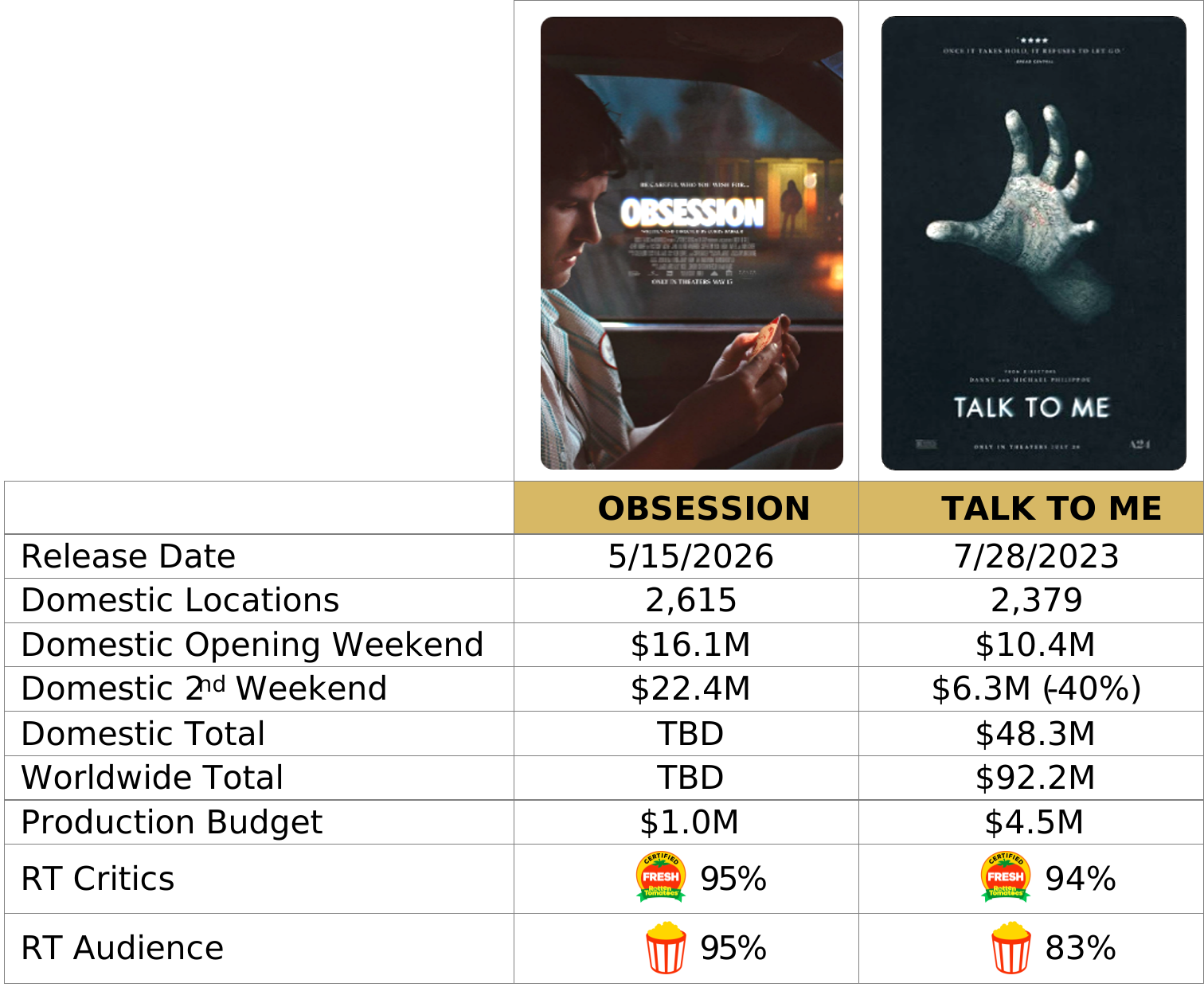
Focus Features’ OBSESSION finished in second place in its second weekend with $22.4M, an increase of 30%. This brings its 10-day totals to $52.8M domestically and $74M globally. While bigger titles have drawn most of the attention, the performance of this micro-budgeted ($1M) movie may be in some ways even more important. The film was written and directed by Curry Barker, the young horror specialist who first gained attention through ultra-low-budget shorts and viral YouTube projects. Before OBSESSION, Barker was best known for directing the cult microbudget horror film MILK & SERIAL, reportedly made for only $800, along with the short film THE CHAIR, both of which established him as a rising new voice in modern horror. The breakout success of OBSESSION has already elevated Barker from online creator to major studio prospect, with the filmmaker now attached to a new TEXAS CHAIN SAW MASSACRE project for A24. With an increase of 30% in its second weekend box office and carrying an impressive 95% audience score on Rotten Tomatoes, OBSESSION has captured the attention of horror fans and become a hot topic of discussion. It may do even better in the weeks ahead, as the pace of summer moviegoing kicks in. While the film is a winner on its own merits, its marketing campaign has been key to its success, showing how indie horror can break through without the benefit of massive studio budgets. Rather than relying on traditional TV spots, the campaign leaned into viral marketing, social media engagement, and grassroots horror buzz that made audiences feel like they were discovering the film themselves. The buzz began at last year’s Toronto International Film Festival, where OBSESSION had its world premiere in the event’s Midnight Madness program. Reactions were exceptionally positive, leading to a $15M-plus bidding war among studios. That early festival heat created industry awareness months before the film reached theatres. Filmmaker Curry Barker had already established a cult following with younger horror audiences through YouTube and TikTok projects, including the ultra-low-budget hit MILK & SERIAL. Focus Features smartly used Barker himself as part of its marketing for OBSESSION, positioning him as an authentic horror creator rather than a traditional studio filmmaker. The campaign’s most talked-about element was its guerrilla billboard strategy in New York and Los Angeles. Billboards featuring seemingly harmless love messages from a character named “Nikki” included a phone number audiences could text. As the campaign evolved, the messages became increasingly unsettling and obsessive, mirroring the film’s themes. Fans who texted the number received creepy voicemails and disturbing responses, creating a viral social media phenomenon as screenshots and reactions spread across TikTok, Reddit, Instagram, and X. The campaign also benefited from gaining traction with horror influencers and online genre communities. Early reactions emphasized how disturbing and emotionally intense the movie was, helping turn OBSESSION into a must-see title for younger horror fans. Focus Features further amplified the film’s indie credibility by emphasizing Barker’s DIY roots and the movie’s modest production budget, selling audiences on the idea that they were witnessing the arrival of a major new horror filmmaker. In many ways, Focus Features’ marketing campaign has followed the blueprint for marketing indie horror, starting with a film festival premiere, leading to social media buzz, and relying on word-of-mouth to get the word out. This approach has been successfully deployed to support titles such as TALK TO ME, SMILE, and LONGLEGS. OBSESSION is clearly the return on investment (ROI) darling of 2026, achieving a worldwide gross to total production cost of 7.4 to 1 in just its first ten days in release.OBSESSION vs. TALK TO ME after 10 Days
#3 - MICHAEL
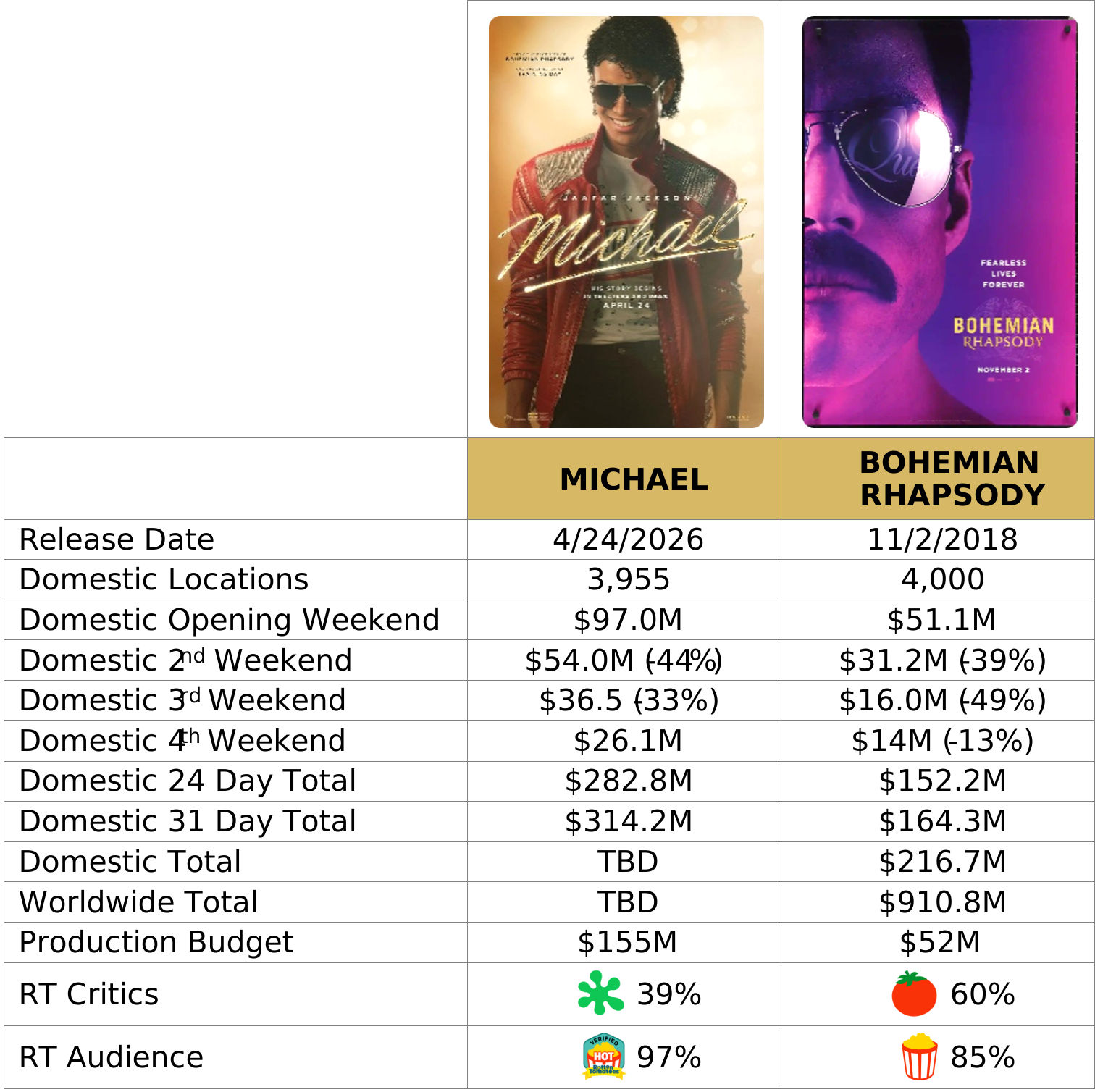
Lionsgate’s MICHAEL continued its amazing run by finishing in third place in its fifth weekend, adding $20M and dropping 23% from last weekend. This brings its 31-day totals to $314.2M domestically and $782.3M worldwide. Very rarely does such good news coincide with a studio’s quarterly earnings call, but that is exactly what happened for Lionsgate this week. Last Sunday, MICHAEL took back first place in its fourth weekend in theatres. Then on Thursday, Lionsgate celebrated its good fortune with its investors on its Fourth Quarter earnings call, and added that the studio has decided to move forward with a second MICHAEL movie, after seeing the potential to create a new and valuable franchise. Lionsgate CEO Jon Feltheimer emphasized the extraordinary performance of MICHAEL, framing it as a transformational property for the studio and grouping it with THE HOUSEMAID as keys to “strengthening our brand and increasing our forward visibility.” But the most revealing comments came during the analyst Q&A when executives specifically addressed MICHAEL 2. Motion Picture Group Chairman Adam Fogelson said there is still “a ton of incredibly entertaining Michael Jackson story” to come, including “a significant amount of music” not covered in the first film. Fogelson revealed that the studio shot roughly “25% to 30%” of a potential second MICHAEL movie during the production of the first film. That comment seems to indicate that the studio planned a multi-film structure well before MICHAEL’s theatrical success was apparent. It also lowers the production risk and startup costs for a sequel because substantial footage, performances, and staging already exist. The executives’ financial framing was also important. Feltheimer said MICHAEL is “on track to become our first movie grossing over a billion dollars at the worldwide box office,” with Japan still left to open. For Lionsgate — a studio that historically operates with far smaller financial resources than Disney or Universal — a billion-dollar global performer changes the scale of the company overnight. MICHAEL is now seen as a long-term asset akin to the JOHN WICK, HUNGER GAMES, and TWILIGHT franchises from prior Lionsgate eras The comments also suggested that Lionsgate believes audience demand remains extremely deep because the first film only scratches the surface of Jackson’s life and music catalog. The first MICHAEL movie was not constrained by a lack of material but instead focused on a subset of Michael Jackson’s life and career, leaving creative and commercial upside to explore other chapters. Another key takeaway from management’s remarks was confidence in the theatrical market itself. Feltheimer said Lionsgate is seeing audiences return to theatres for event-style movies and premium large-format experiences. MICHAEL fits perfectly into that strategy because the musical performances and concert recreations play especially well in IMAX and other Premium Large Format auditoriums with advanced digital sound. Executives view the property as a theatrical franchise first, not merely a streaming title. Lionsgate executives seem no longer to be debating whether to proceed with a sequel but instead how much untapped potential remains. That is the language of a studio preparing to capitalize on a franchise that has exceeded even the most optimistic internal expectations.MICHAEL vs. BOHEMIAN RHAPSODY after 31 Days
#4 - THE DEVIL WEARS PRADA 2
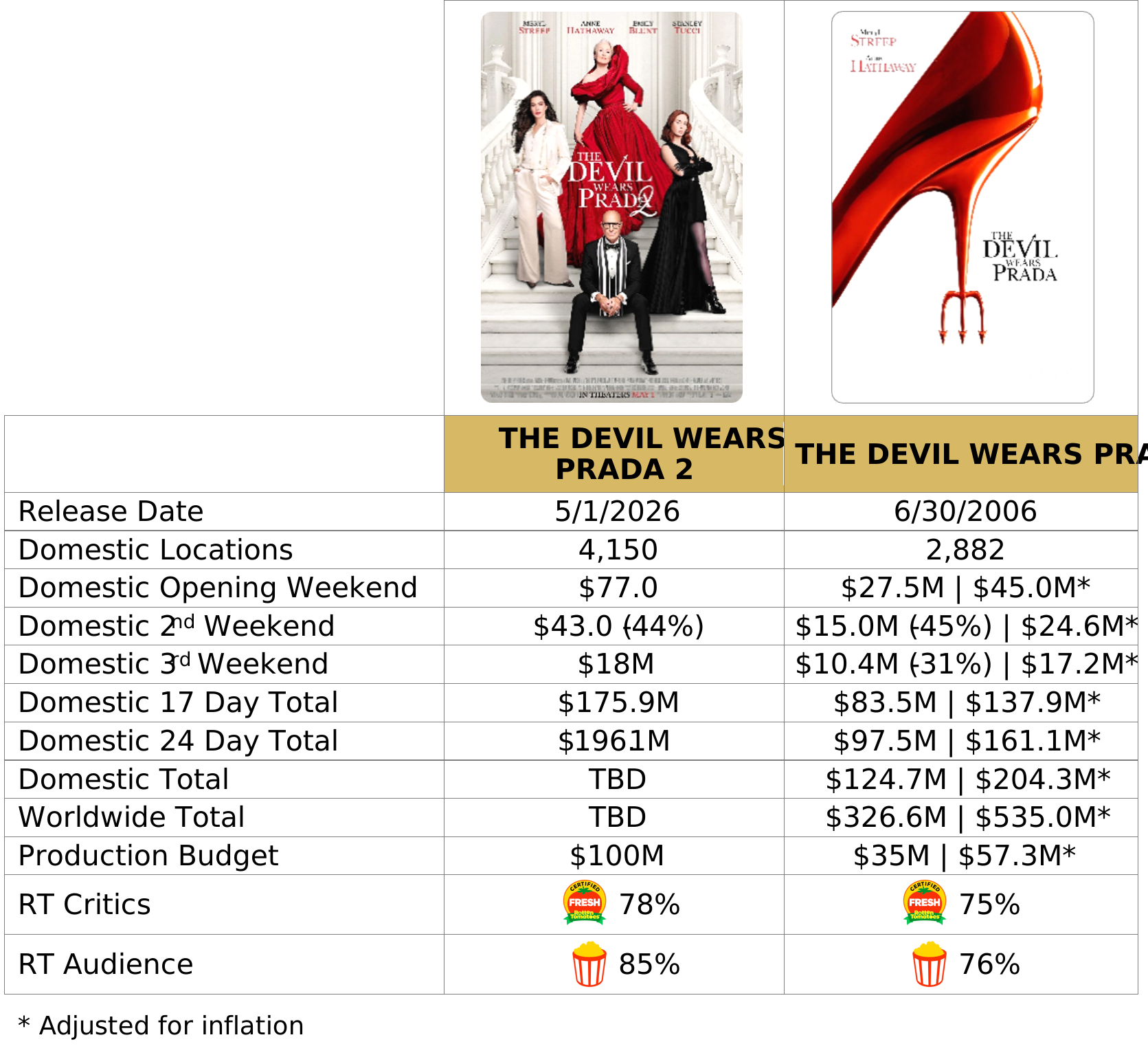
Disney’s THE DEVIL WEARS PRADA 2 continued its stylish ways by bringing in an additional $12.6M and dropping 29% to finish in fourth place in its fourth weekend. This brings its 24-day totals to $196.1M domestically and $604.1M worldwide. While MICHAEL may have stolen some of the spotlight from this film, PRADA 2 has been a financial homerun for Disney with its enviable 6 to 1 ratio of production budget to worldwide box office. The film has surpassed the box office of the original, both in absolute dollars and adjusted-for-inflation amounts. While Lionsgate was fanning the flames of a MICHAEL 2 sequel earlier this week, Disney has a much more complicated path to get to PRADA 3. The jam-packed schedules of the four main actors make getting something on their calendars very difficult. All four of its lead actors will benefit from the success of PRADA 2, making them more in demand for other projects, ironically making it much harder to pull off another sequel. Here is what each of the four already has going on: Meryl Streep Streep remains extremely active and will turn 77 on June 22 and appears to be balancing prestige streaming work, studio fantasy films, and adult-oriented dramas.- Only Murders in the Building — Streep is expected to continue her recurring role as Loretta Durkin after becoming one of the breakout additions to the series.
- NARNIA — Streep is reportedly in talks to voice Aslan in Greta Gerwig’s Netflix theatrical adaptation of the C.S. Lewis property, one of the highest-profile fantasy projects currently in development.
- USEFUL IDIOTS — A political thriller directed by Joseph Cedar, co-starring Sigourney Weaver. Industry reports describe it as a major prestige drama package aimed squarely at awards attention.
- The Corrections — Streep is attached to star in a series adaptation for Netflix of Jonathan Franzen’s acclaimed novel. The project has generated substantial industry interest because the book had previously failed to reach the screen multiple times.
- A QUIET PLACE PART III — Blunt is expected to return to the franchise that became one of Paramount’s signature horror properties.
- WALK IN THE BLUE FIELDS — A literary adaptation currently in production.
- Untitled Hawaii-set crime film — Blunt is attached to a developing crime project set in Hawaii.
- THE ODYSSEY — Hathaway is part of Christopher Nolan’s massive mythological adaptation alongside Tom Holland and Zendaya. It is already considered one of the defining theatrical releases of 2026.
- VERITY — An adaptation of Colleen Hoover’s bestselling novel. The project has enormous commercial upside given Hoover’s fan base.
- THE END OF OAK STREET — A David Robert Mitchell-directed IMAX-scale science fiction thriller involving a suburban neighborhood displaced by a cosmic event.
- Hathaway is also rumored to be part of additional major studio productions currently under wraps.
- Tucci is expected to continue expanding his highly successful food/travel television brand following the acclaim for his Italy-focused series work.
- He also remains in demand as a supporting player in prestige adult dramas and streaming ensemble projects. Several additional acting projects are reportedly being negotiated but have not yet been formally announced.
THE DEVIL WEARS PRADA 2 vs. THE DEVIL WEARS PRADA after 24 Days
#5 - THE SHEEP DETECTIVES
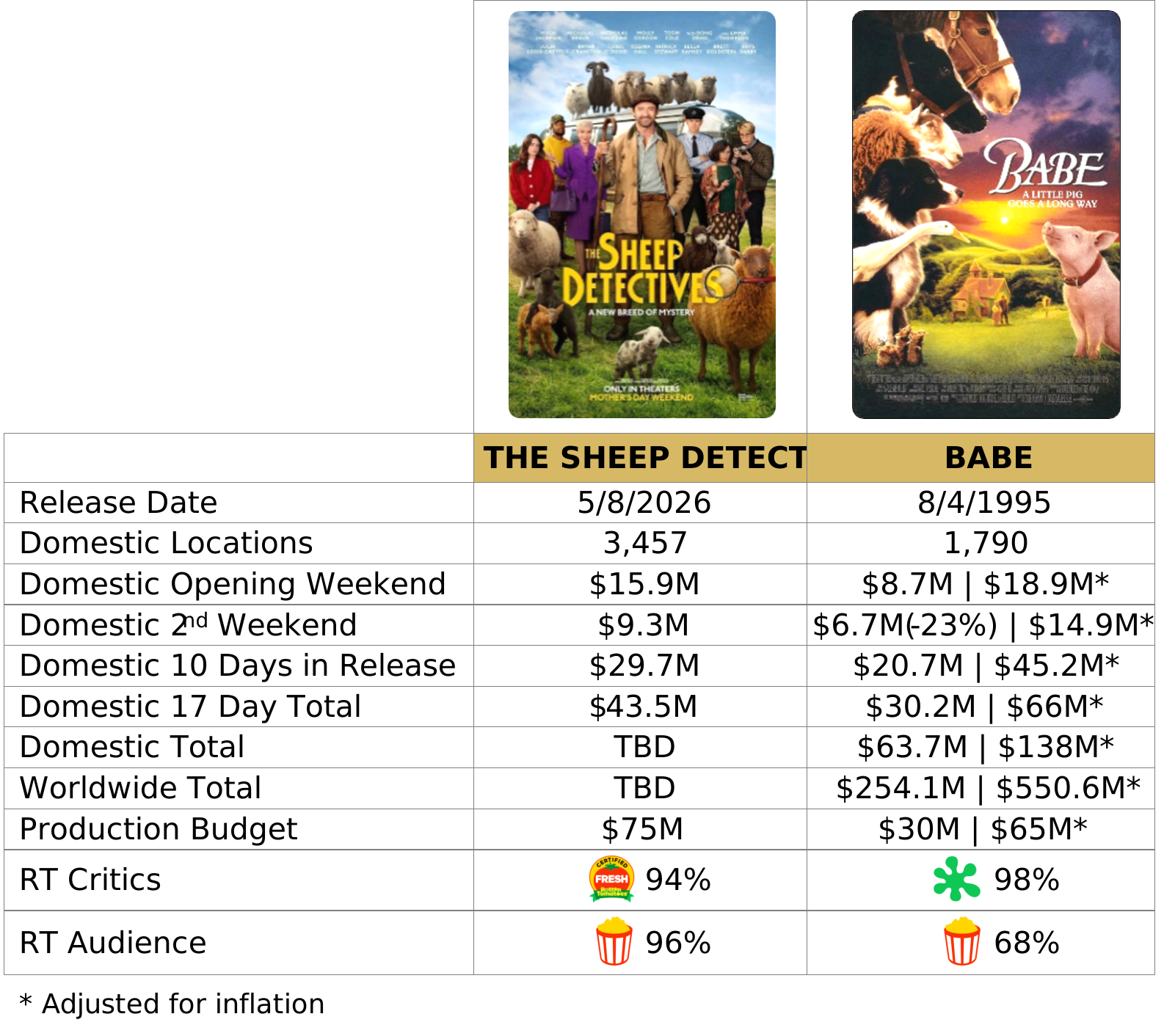
THE SHEEP DETECTIVES from Amazon MGM finished fifth in its third weekend, bringing in $9M. This brings its 17-day total to $43.5M domestically, exceeding expectations and giving Amazon the potential to have created a second new franchise this year after PROJECT HAIL MARY. The family-friendly vibe of THE SHEEP DETECTIVES has helped create an eager audience waiting to watch it when it eventually appears on Amazon Prime Video. Executives have been especially impressed by the film’s broad demographic appeal. In addition to families, the movie also attracted adults of all ages, who found its offbeat humor and mystery elements to be charming. Industry watchers also see THE SHEEP DETECTIVES as proof of the potential for smart counterprogramming to succeed in a crowded marketplace. Its release window has been well chosen, with weeks of the family market still up for grabs until TOY STORY 5 opens on 6/19.THE SHEEP DETECTIVES vs. BABE after 17 Days
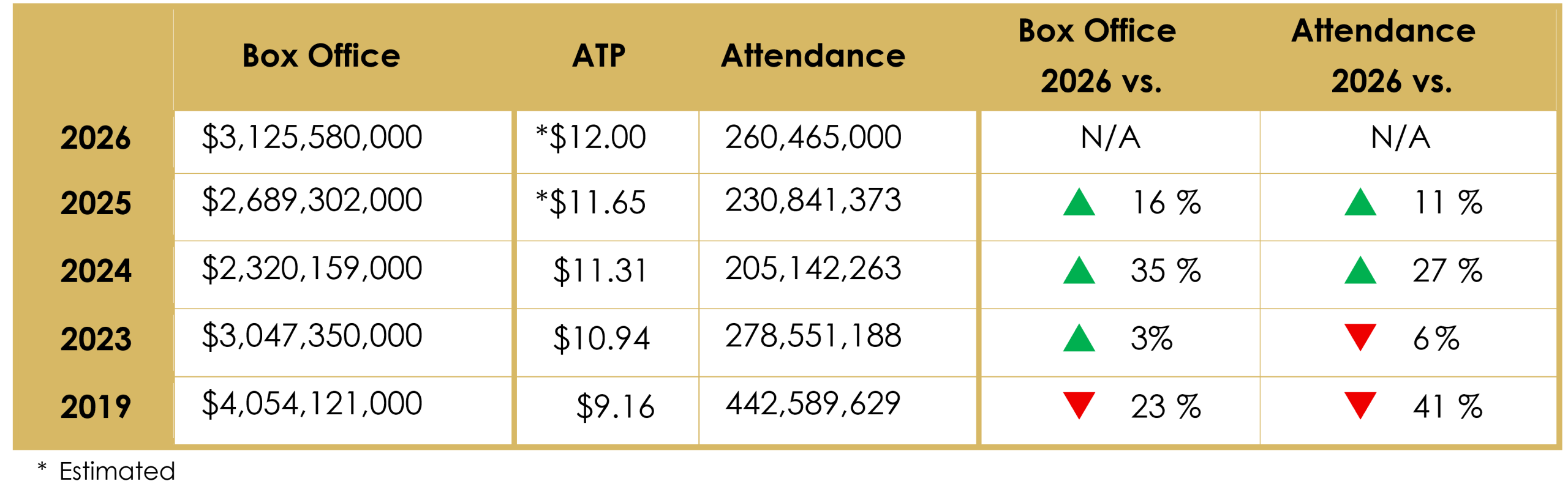
Where Are We as of 5/21/2026
BOX OFFICE AND ATTENDANCE – 20 WEEKS YEAR TO DATE