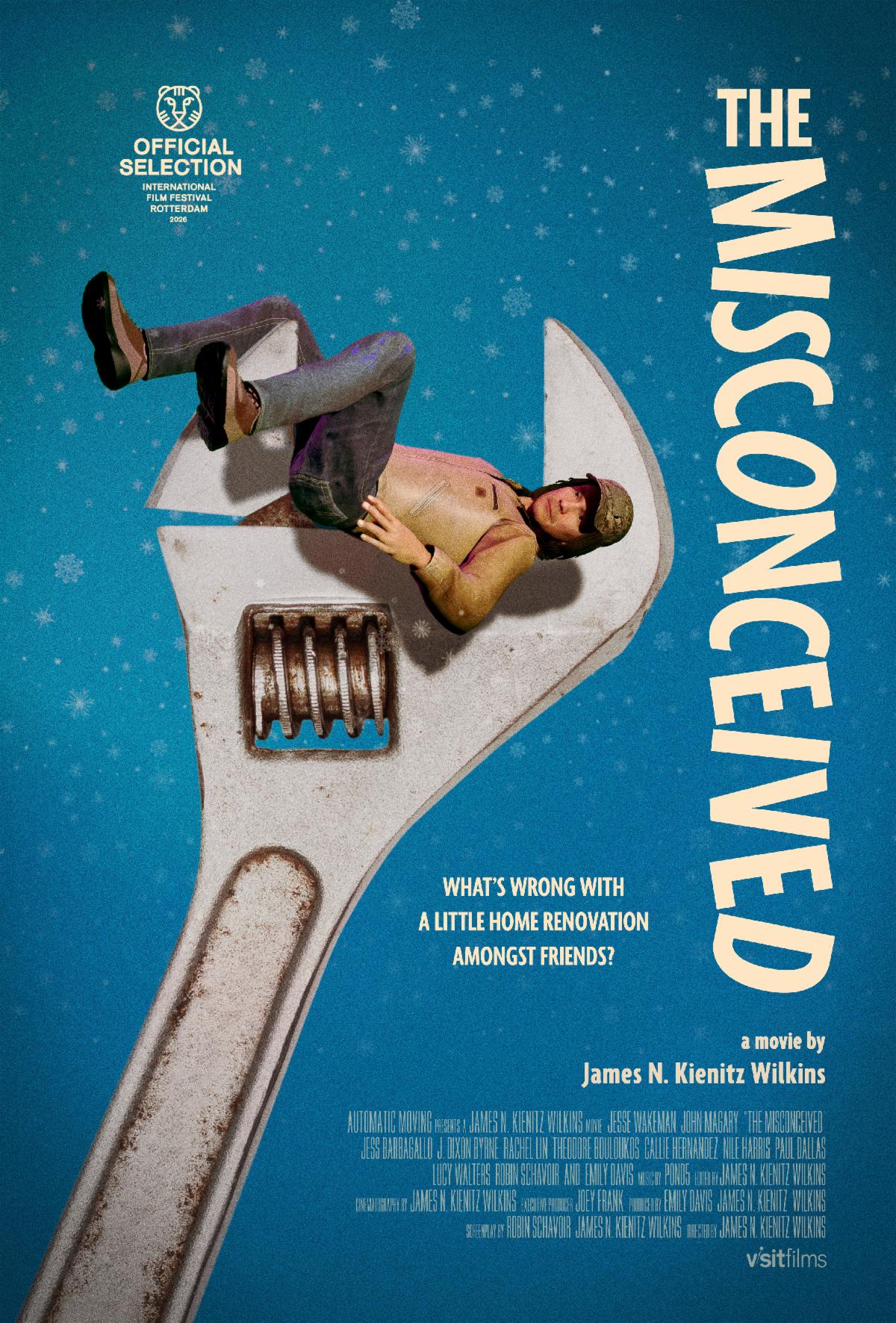
A struggling filmmaker and single father navigates work-life balance through home renovation in this experimental 3D comedy that explores modern creative labor conditions.
Original Release | May 8, 2026 | Limited

Country of Origin: United States
Language: English
The film was originally pitched as a live-action follow-up to Wilkins's 2019 feature The Plagiarists, but after several indie studios turned it down, the project was reimagined entirely inside Unreal Engine, the same software framework built for first-person shooter games. The entire 3D world — down to the Dunkin' Donuts and name-brand imagery — was rendered digitally rather than photographed.
Rather than commissioning an original composer, Wilkins sourced the film's music entirely from Pond5, a royalty-free music platform. The result is a deliberately synthetic, corporately optimistic soundscape — like "the kind of tune you'd hear watching a pharmaceutical giant's onboarding video" — that collides with the characters' working-class reality.
In a late-film confrontation, Tyler and Tobin trade dueling speeches about whether feature films are "outdated" or essential to making "the real world real." The end credits reveal these monologues smuggle in direct quotations from arts writers, including The New Yorker's Richard Brody and Film Comment's Violet Lucca — a meta-gag about authorship and borrowed language.
While most figures are rendered in stiff, photorealistic motion-capture (lead character Tyler is modeled to evoke Keanu Reeves), others are deliberately more cartoonish. Tyler's Gen-Z coworker Mikey is drawn like a pointy-eared imp — a visual choice that reflects the classist, reductive way the other characters view him. His contact is even saved in Tyler's phone as "Mikey Worker.